Ob and Yenisei plumes in the Kara Sea

LIF lidar measurements across river-influenced Kara Sea waters in July 2016, with published fields from several Arctic campaigns

Published figures

Interpolated campaign fields, reproduced in their original published form.

Regional composite

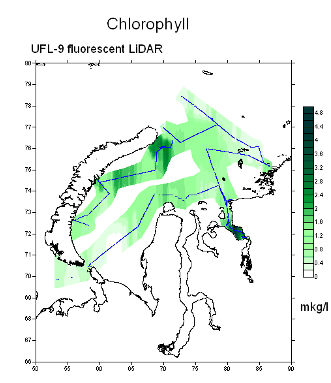
Interpolated chlorophyll a field mapped along the lidar track, Kara Sea, Regional composite
Fig. 1Chlorophyll a
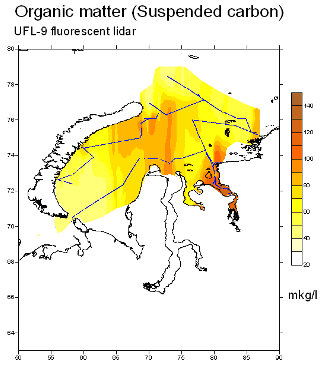
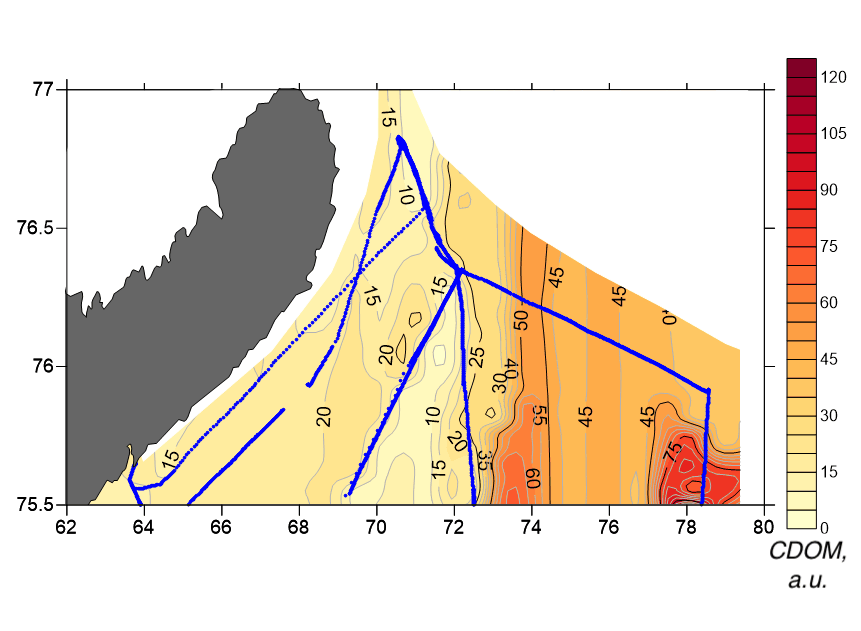
Interpolated suspended organic carbon field mapped along the lidar track, Kara Sea, Regional composite
Fig. 2Organic matter, suspended carbon
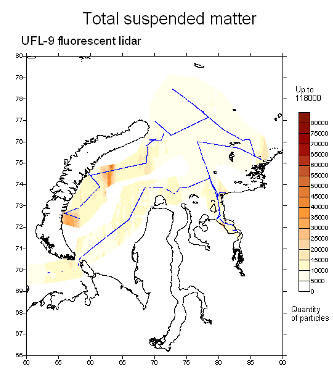
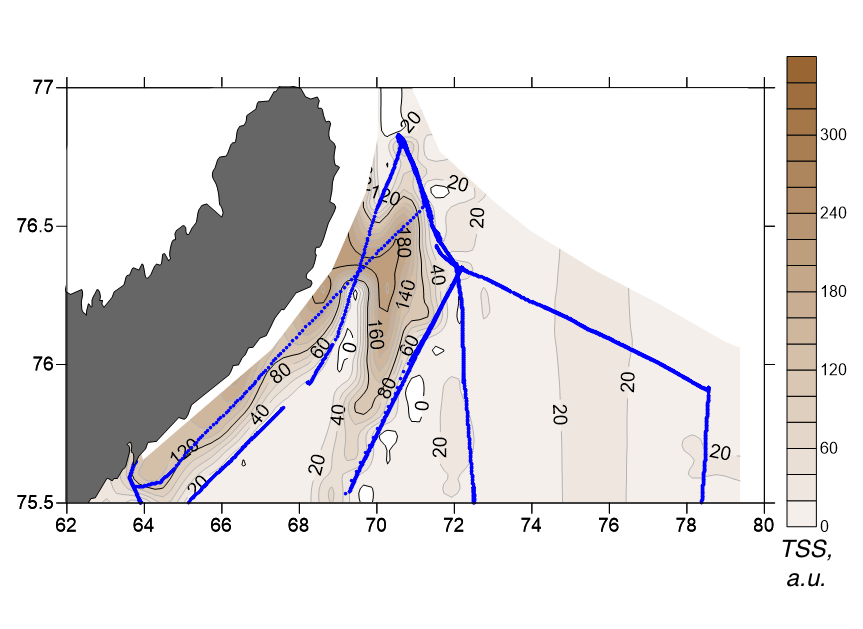
Interpolated particle count field mapped along the lidar track, Kara Sea, Regional composite
Fig. 3Particle count

July 2016

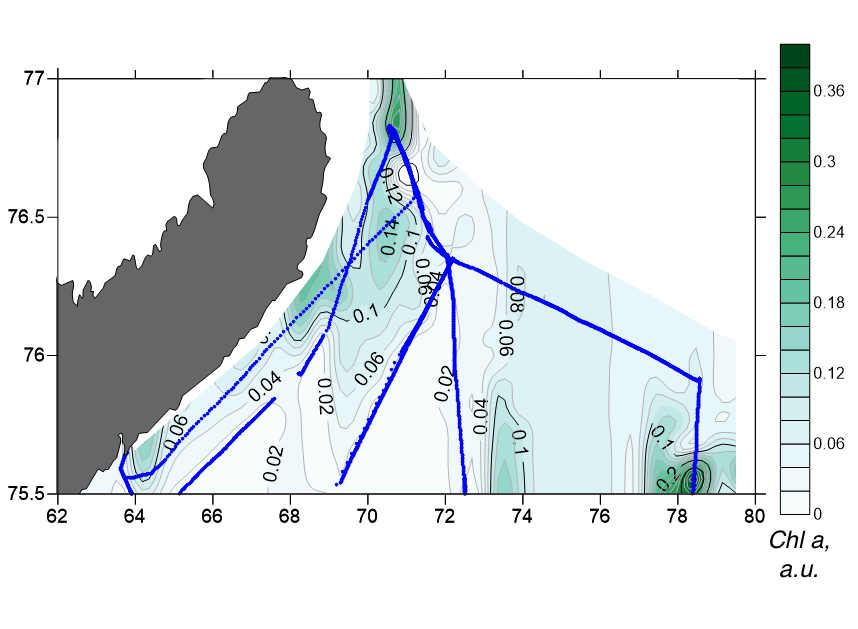
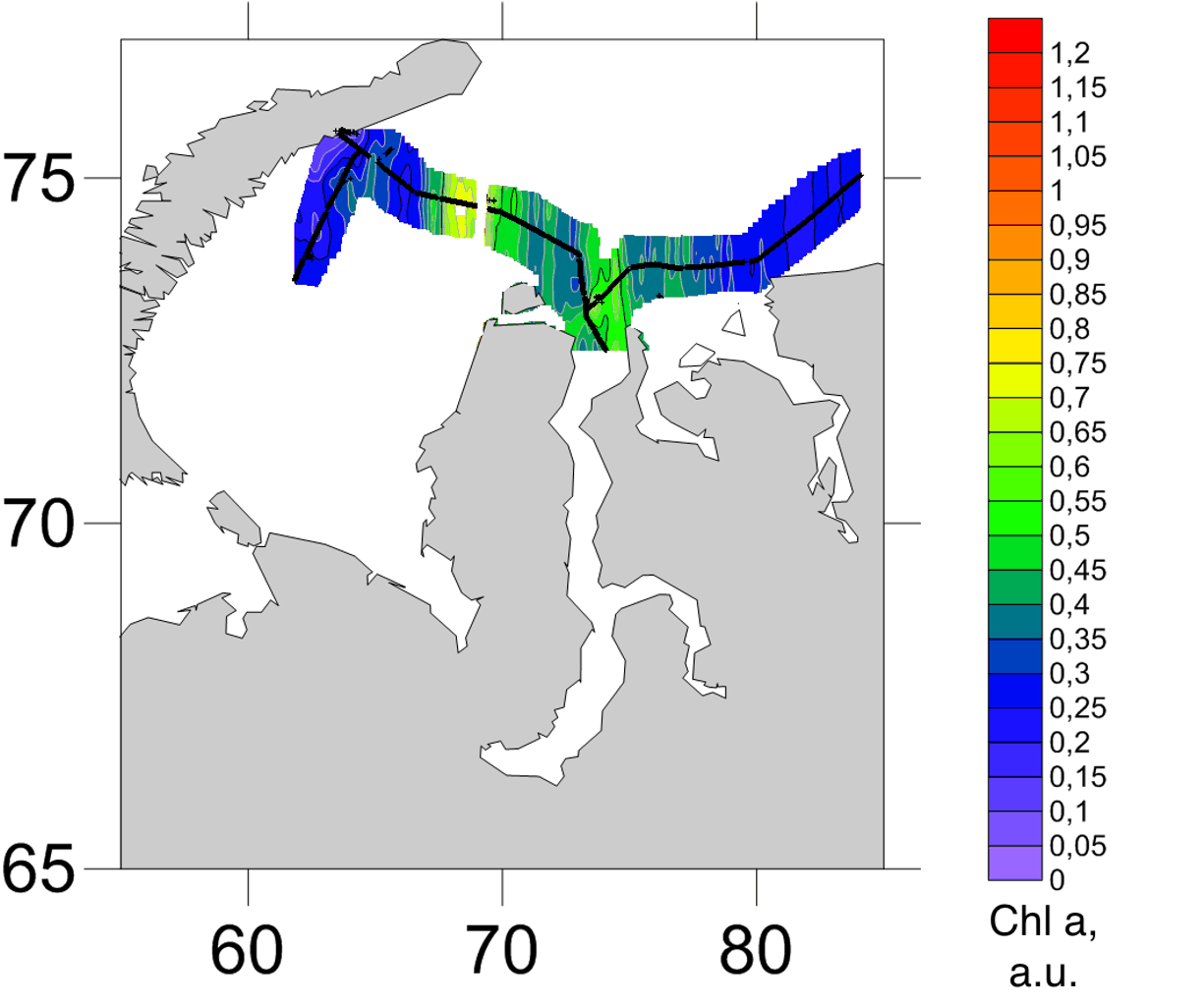
Interpolated chlorophyll a field mapped along the lidar track, Kara Sea, July 2016
Fig. 4Chlorophyll a
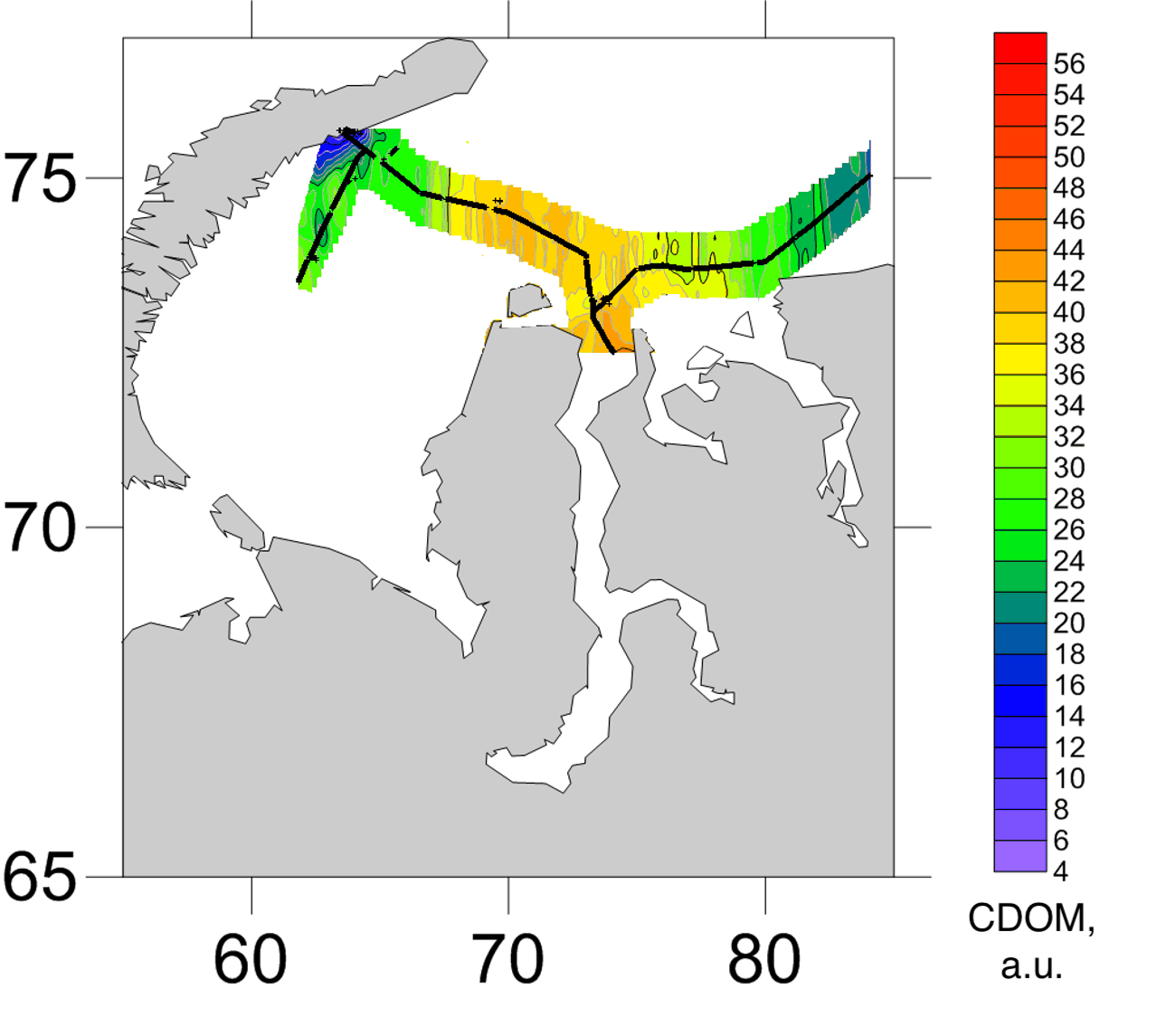
Interpolated CDOM field mapped along the lidar track, Kara Sea, July 2016
Fig. 5CDOM
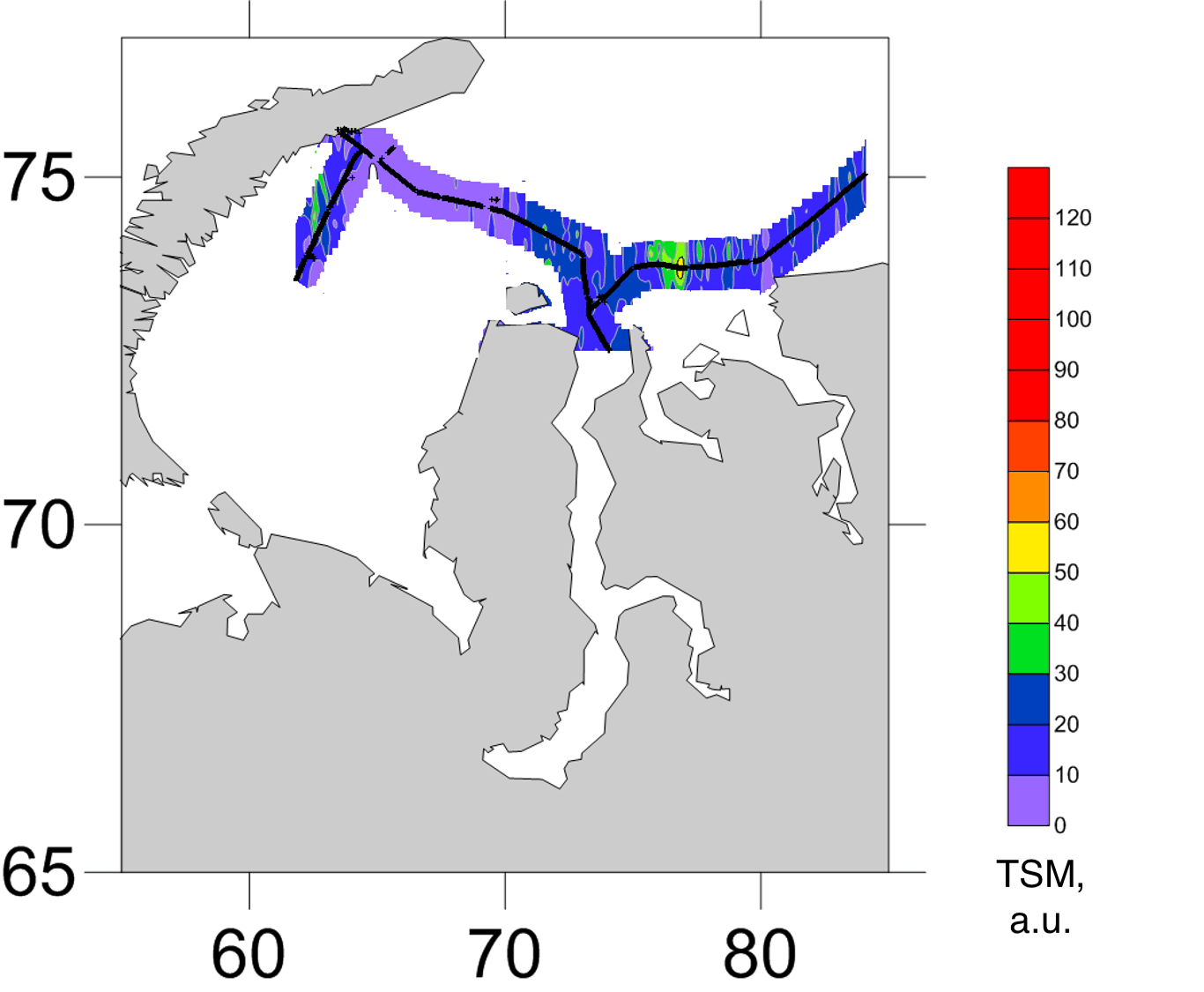
Interpolated total suspended matter field mapped along the lidar track, Kara Sea, July 2016
Fig. 6TSM

September 2017

Interpolated chlorophyll a field mapped along the lidar track, Kara Sea, September 2017
Fig. 7Chlorophyll a
Interpolated CDOM field mapped along the lidar track, Kara Sea, September 2017
Fig. 8CDOM
Interpolated total suspended matter field mapped along the lidar track, Kara Sea, September 2017
Fig. 9TSM
Kara SeaArctic Ocean
50 km
● Kara Sea 2016, July, 2016-07-28 – 2016-07-30121,400 measurements IDW interpolation, 600 samples
Chl-a0.034.45µg/L
CDOM0.318.51a.u.
TSM0.8220.7mg/L

Fig. 10 Campaign measurement record. 121,400 lidar returns are plotted along the vessel track for Chl-a, CDOM, TSM. The field view applies inverse-distance weighting to the same observations; the shoreline is from Natural Earth.

From 28 to 30 July 2016, a ship-mounted LIF lidar measured chlorophyll-a, CDOM, and suspended matter in the Kara Sea. The track crosses shelf waters influenced by discharge from the Ob and Yenisei rivers.

The published figures include the July 2016 and September 2017 campaigns alongside a regional composite. Earlier observations from the ice-free seasons of 2005–2011 contributed to a 2017 study of the structure of the combined Ob–Yenisei plume.