
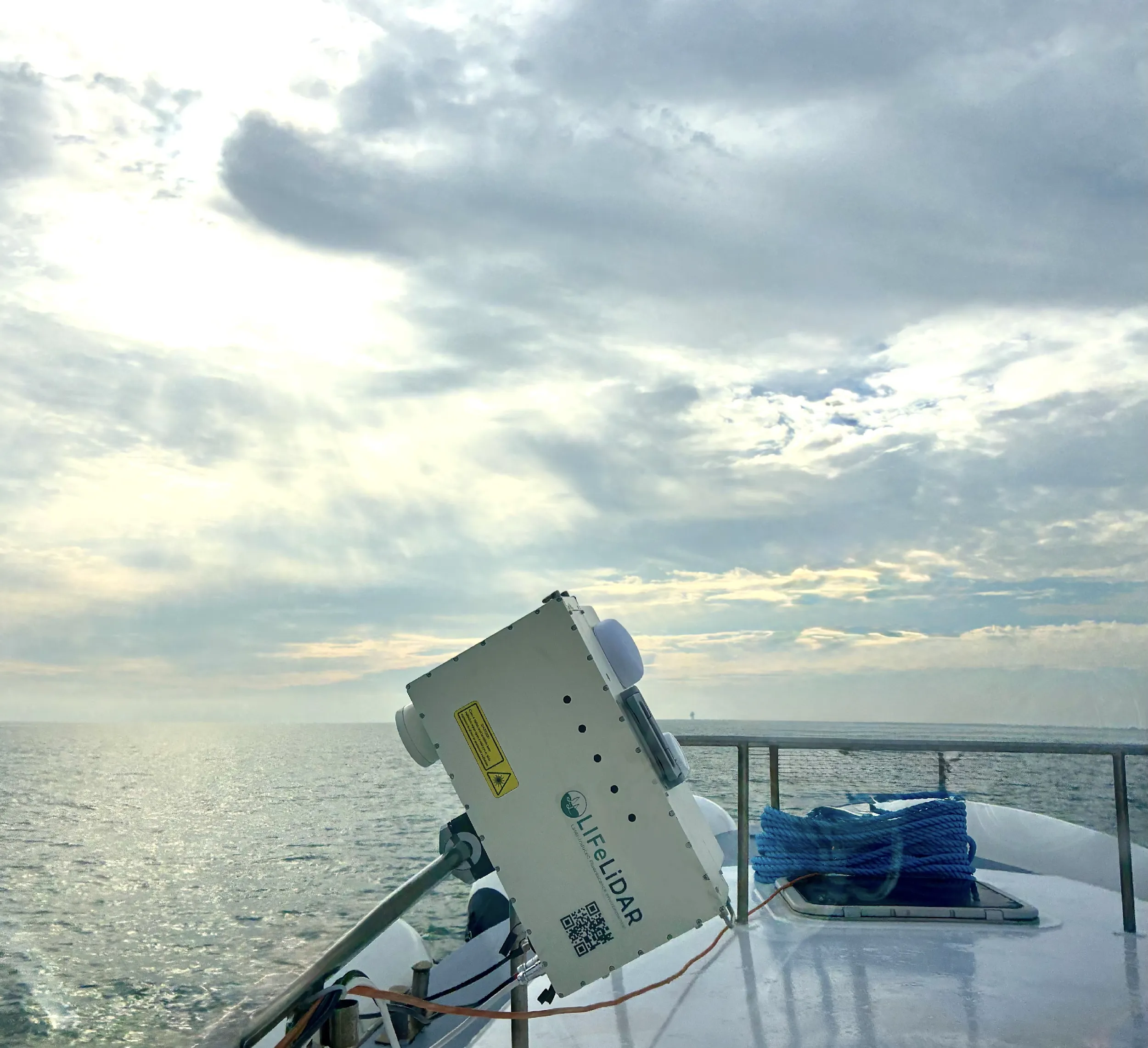
LIFL-11
The LIFL-11 combines laser-induced fluorescence, elastic scattering, and Raman scattering in one survey instrument. It records the full 48-band return in about fifteen seconds at a station or measures four selected bands at up to 10 Hz while underway. Two excitation configurations cover chlorophyll, CDOM, suspended matter, oils, phenols, and tryptophan.
- Phytoplankton and pigments Measures chlorophyll-a from 0.01 to 1000 mg·m⁻³ and distinguishes pigment returns associated with phycoerythrin and phycocyanin
- Dissolved organic matter Characterises CDOM and FDOM, including fulvic and humic matter and optical markers associated with wastewater
- Hydrocarbons and oil Uses 266 nm excitation to distinguish fluorescence from fuels, diesel, crude oil, and oil-in-water emulsions
- Marine litter and plastics Records fluorescence signatures from polyethylene, polypropylene, wood, leaves, seagrass, and surface foam
- Suspended matter Maps mineral particles and suspended sediment from 0.1 to 1000 g·m⁻³ along the survey track
- Additional spectral signals Phycoerythrin, phycocyanin, bacteriochlorophyll, tryptophan and phenol markers, and methane seep signatures
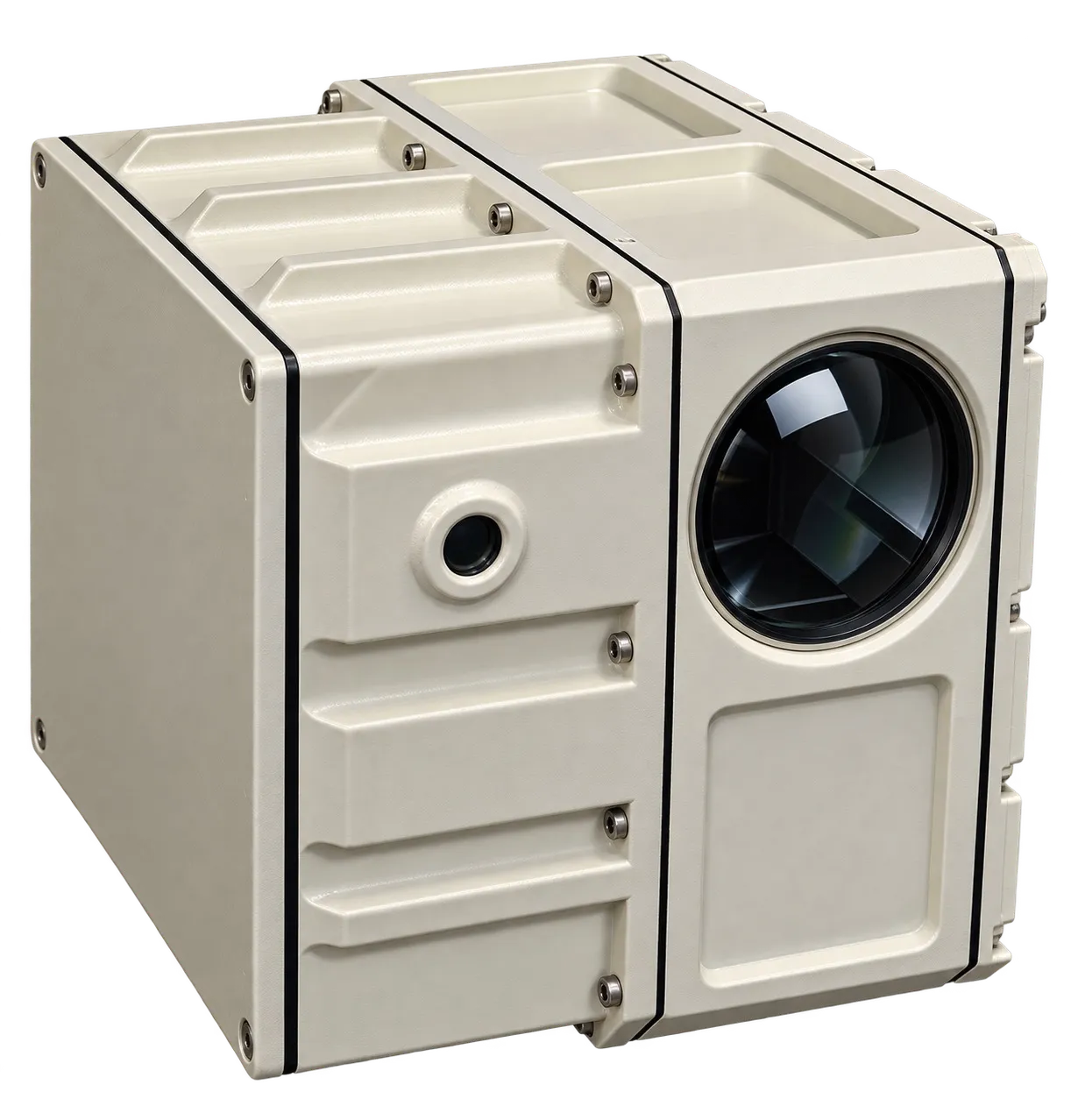
mFL-12
Unattended above-water fluorescence measurements in a 1.75 kg instrument
The mFL-12 is installed above the water for unattended fluorescence measurements at user-defined intervals. A modulated 405 nm source and a 400–880 nm receiver separate the laser-induced signal from ambient light, allowing operation by day or night. Measurements can be transmitted to the Microsensor Viewer for processing, quality control, and review. The instrument is at TRL 7–8 and was field-tested during ESA's PHY2FLEX campaign in Venice in 2025.
- Chlorophyll-a and CDOM Estimates chlorophyll-a and CDOM concentration from a fixed or moving surface platform
- Total suspended matter Estimates total suspended matter at outfalls, river mouths, port basins, and monitoring stations
- Petroleum Detects surface films and oil-in-water emulsions from an above-water installation
- Ambient-light rejection Alternating laser-on and laser-off measurements isolates the fluorescence signal for day-and-night operation
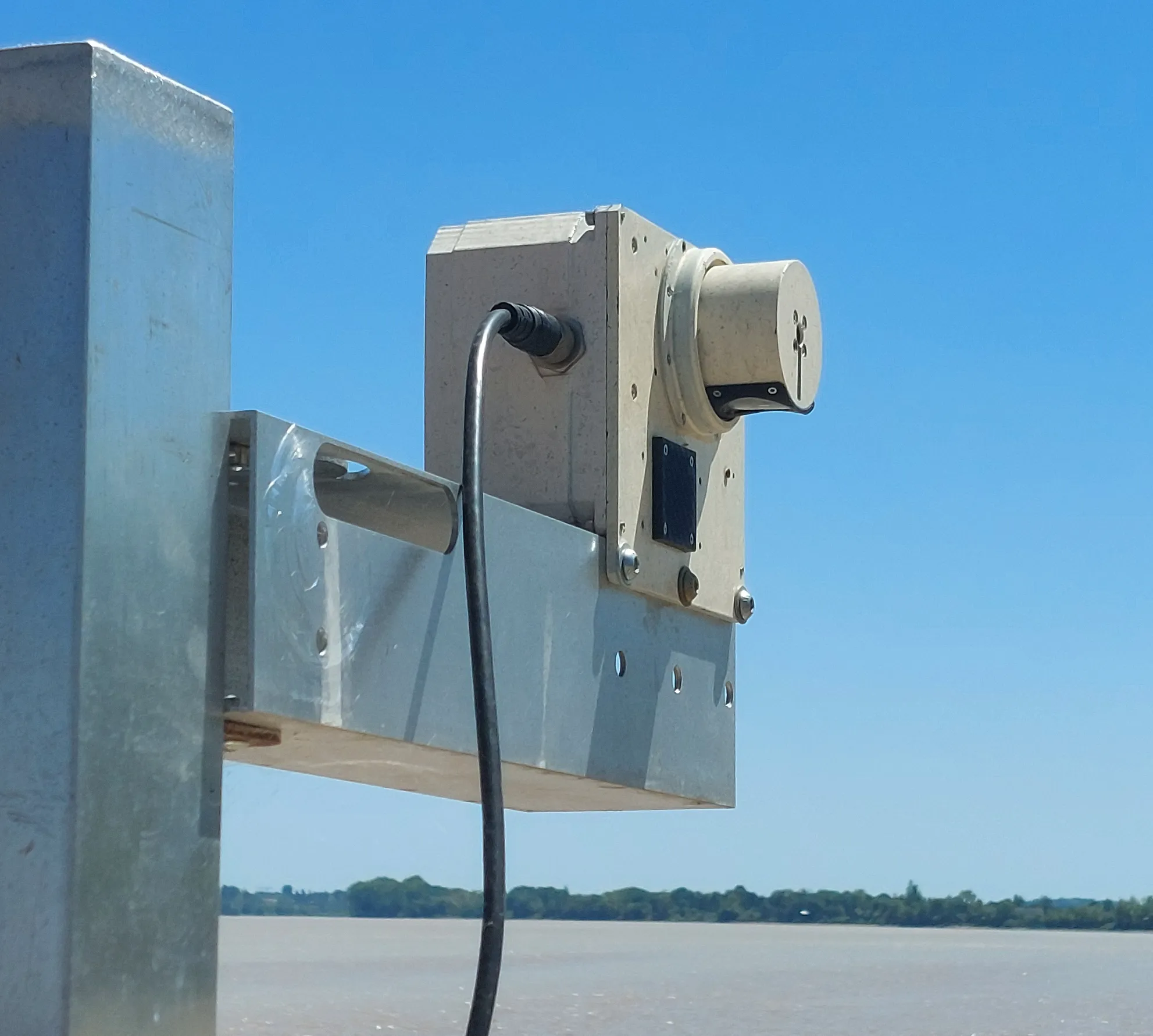
mHR-2
Above-water Rrs measurements for satellite comparison and water-colour monitoring
The mHR-2 is a passive radiometer with one motorised head for downwelling irradiance, sky radiance, sea-surface radiance, and dark-current measurements. Each cycle returns Rrs across 320–880 nm together with position, attitude, and a context image. The instrument was developed through OQOMETHI and field-tested during ESA's PHY2FLEX campaign in Venice in 2025.
- Above-water Rrs Combines downwelling irradiance, sky radiance, and sea-surface radiance with a dark-current measurement in each cycle
- Satellite match-up Returns Rrs for synchronous comparison with satellite observations and active LIF measurements
- Sun-glint rejection Uses the standard 40° sky and 140° sea-surface viewing geometry, measured from zenith, to minimise sun glint
- Autonomous operation Runs unattended and can upload measurement records automatically for remote review
Specifications for each instrument
Public datasheets are listed here; operating and integration documents are supplied with the instrument or on request