Lake Balaton water-quality mapping, 2012

A single-day lidar survey of Lake Balaton on 7 June 2012, measuring chlorophyll-a, suspended matter, and CDOM across optically complex shallow water

Published figures

Interpolated campaign fields, reproduced in their original published form.

Whole-lake composite

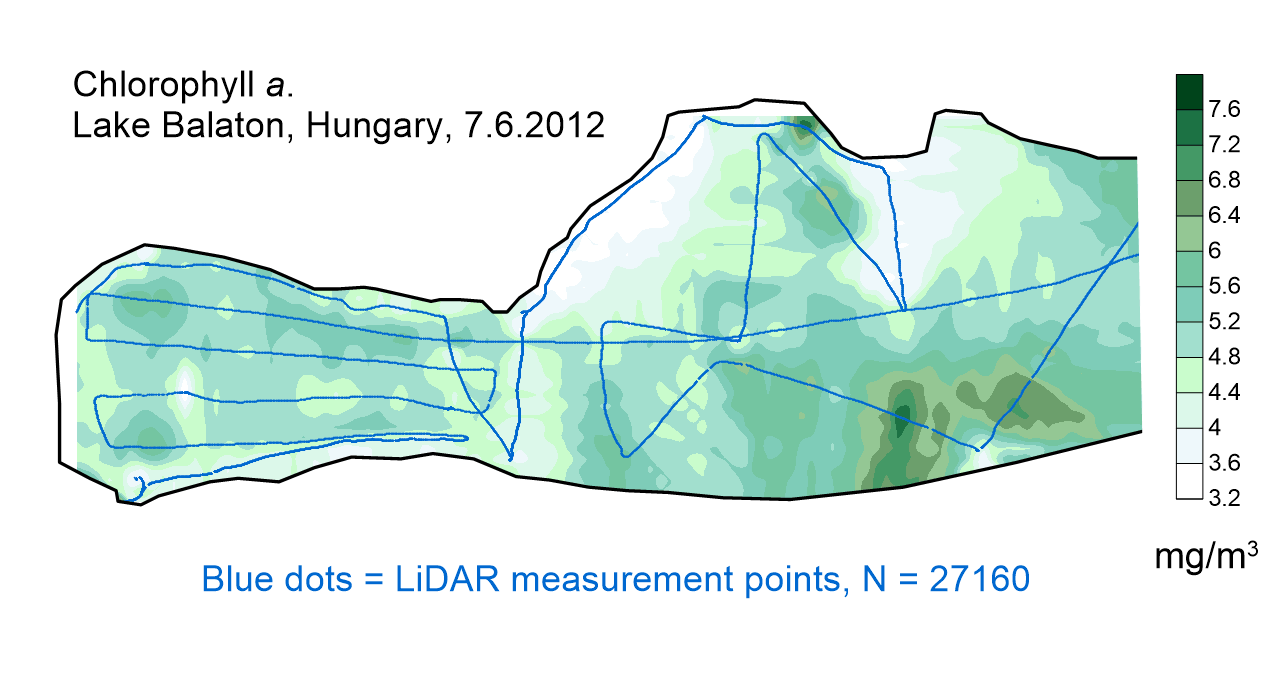
Interpolated chlorophyll a field mapped along the lidar track, Lake Balaton, Whole-lake composite
Fig. 1Chlorophyll a
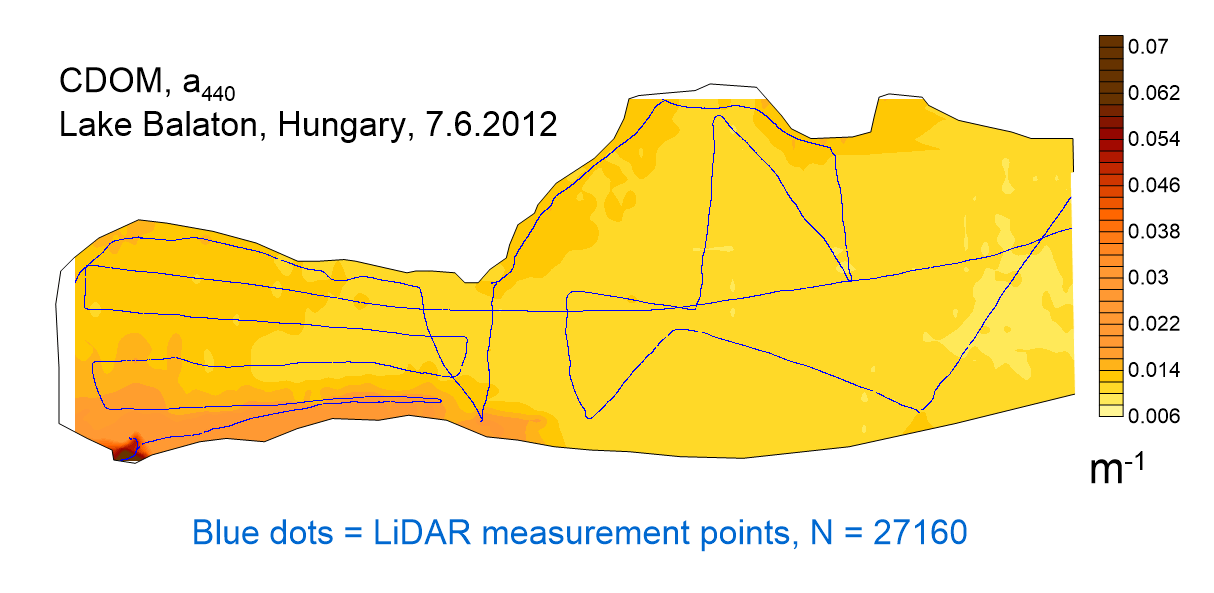
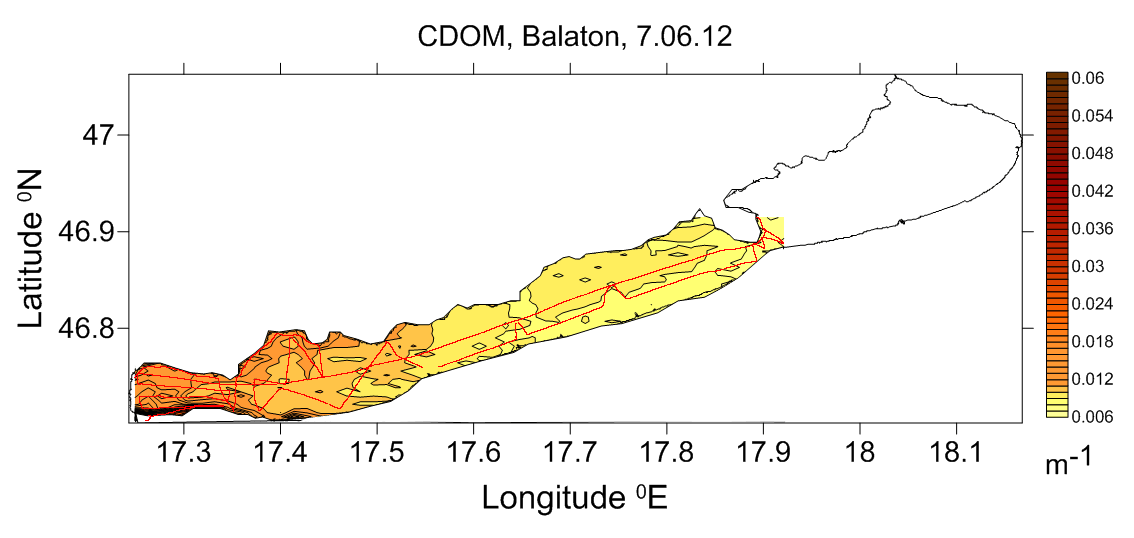
Interpolated CDOM field mapped along the lidar track, Lake Balaton, Whole-lake composite
Fig. 2CDOM
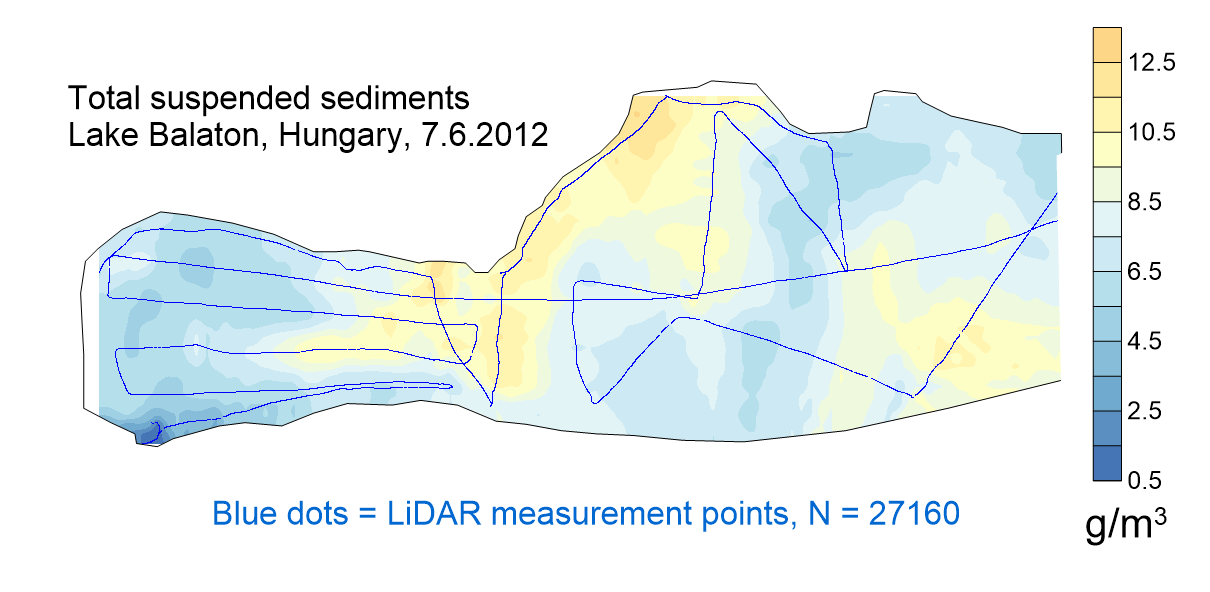
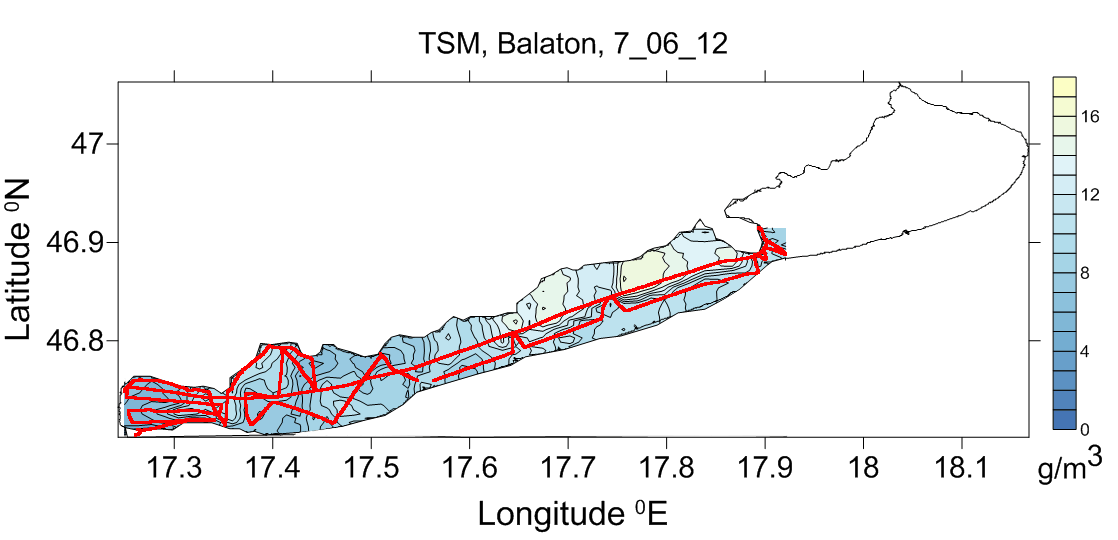
Interpolated total suspended matter field mapped along the lidar track, Lake Balaton, Whole-lake composite
Fig. 3Total suspended matter

7 June 2012

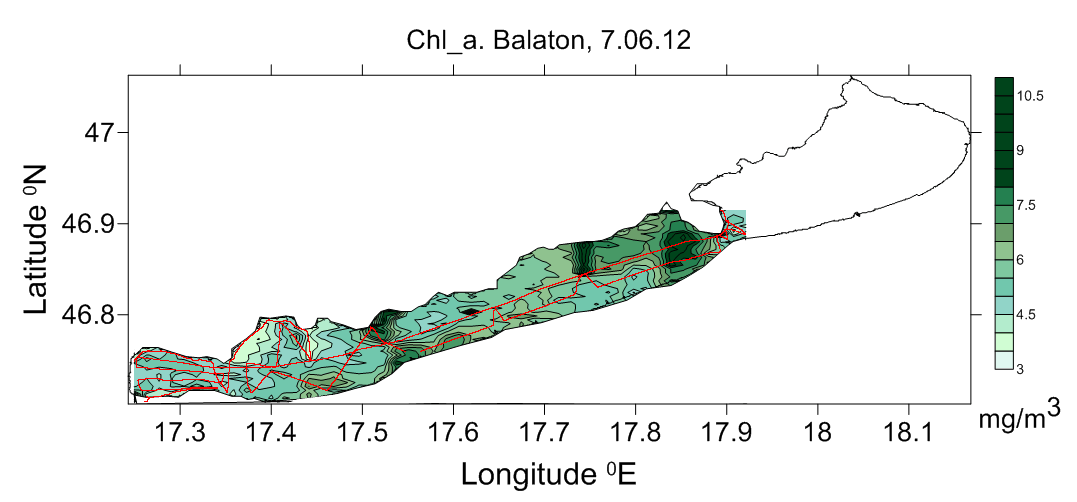
Interpolated chlorophyll a field mapped along the lidar track, Lake Balaton, 7 June 2012
Fig. 4Chlorophyll a
Interpolated CDOM field mapped along the lidar track, Lake Balaton, 7 June 2012
Fig. 5CDOM
Interpolated total suspended matter field mapped along the lidar track, Lake Balaton, 7 June 2012
Fig. 6TSM
Lake BalatonCentral Europe
5 km
● Lake Balaton 2012, 2012-06-0728,931 measurements IDW interpolation, 600 samples
Chl-a3.9647.6µg/L
CDOM1.215.37a.u.
TSM0.8530.3mg/L

Fig. 7 Campaign measurement record. 28,931 lidar returns are plotted along the vessel track for Chl-a, CDOM, TSM. The field view applies inverse-distance weighting to the same observations; the shoreline is from OpenStreetMap.

On 7 June 2012, a ship-mounted LIF lidar mapped Lake Balaton, one of Europe’s largest shallow lakes. The instrument recorded chlorophyll-a, total suspended matter, and CDOM together along the survey track.

Median chlorophyll-a was approximately 6.6 µg/L and median suspended matter was approximately 9.1 mg/L, with higher values in the shallower western basin. Work with the Balaton Limnological Research Institute compared the lidar measurements with conventional freshwater samples and was published in Remote Sensing in 2013.