Baltic to Barents transit, 2021

Approximately 900,000 LIF lidar returns collected over eleven days from the western Baltic through the North and Norwegian seas to the Barents and White seas

Published figures

Interpolated campaign fields, reproduced in their original published form.

Five-sea composite

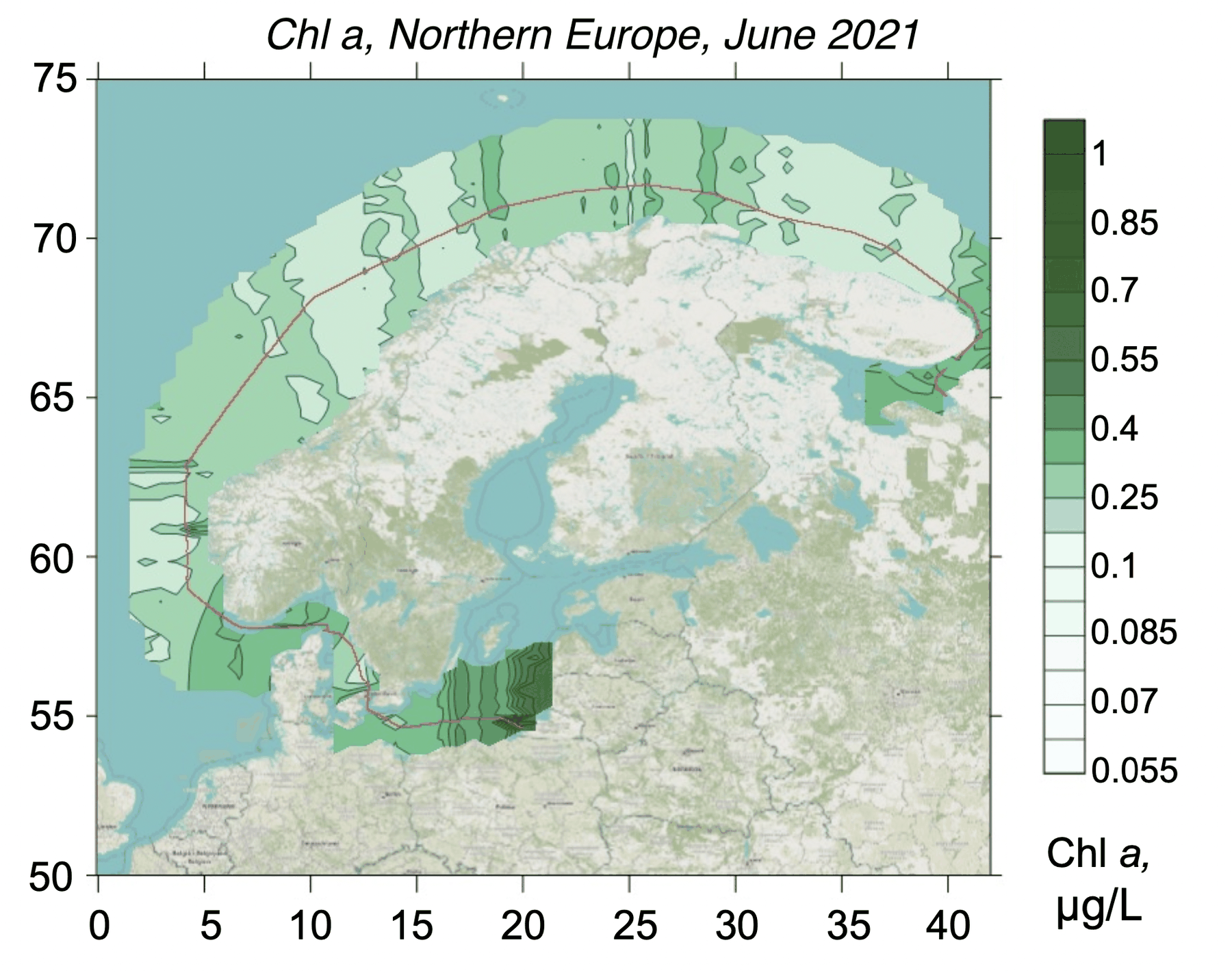
Interpolated chlorophyll a field mapped along the lidar track, Baltic, North, Norwegian, Barents seas, Five-sea composite
Fig. 1Chlorophyll a
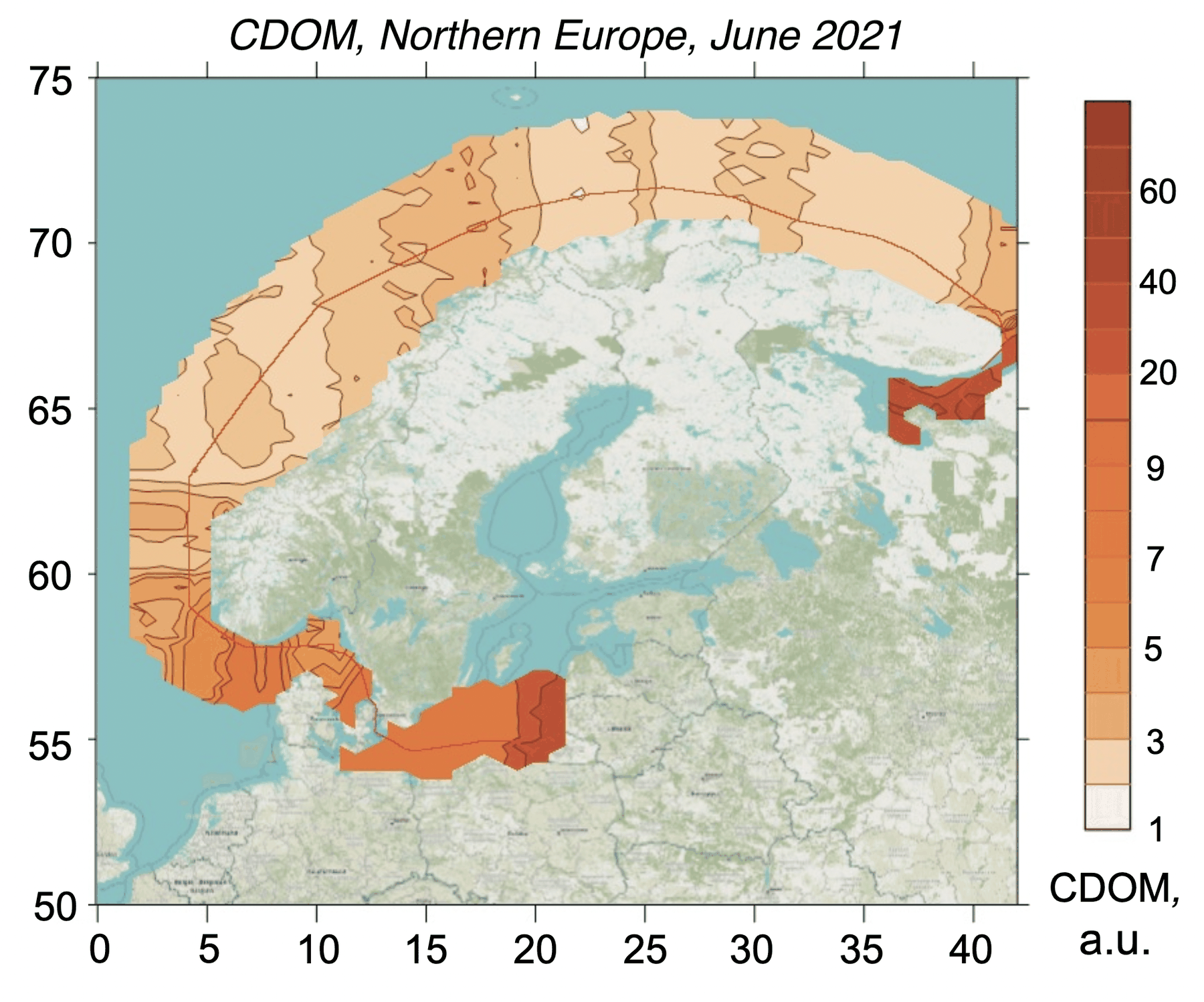
Interpolated CDOM field mapped along the lidar track, Baltic, North, Norwegian, Barents seas, Five-sea composite
Fig. 2CDOM
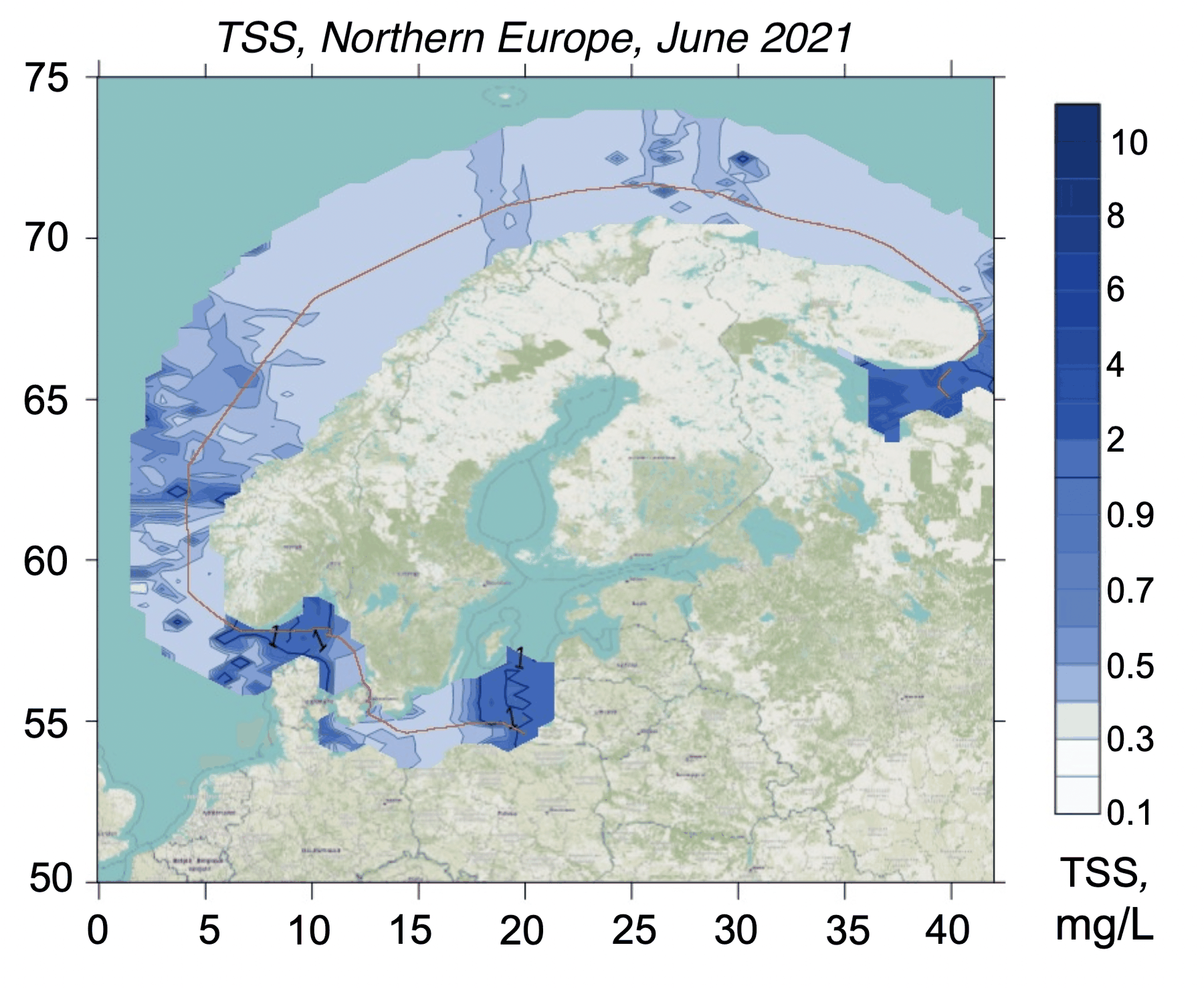
Interpolated total suspended matter field mapped along the lidar track, Baltic, North, Norwegian, Barents seas, Five-sea composite
Fig. 3TSM

Baltic leg

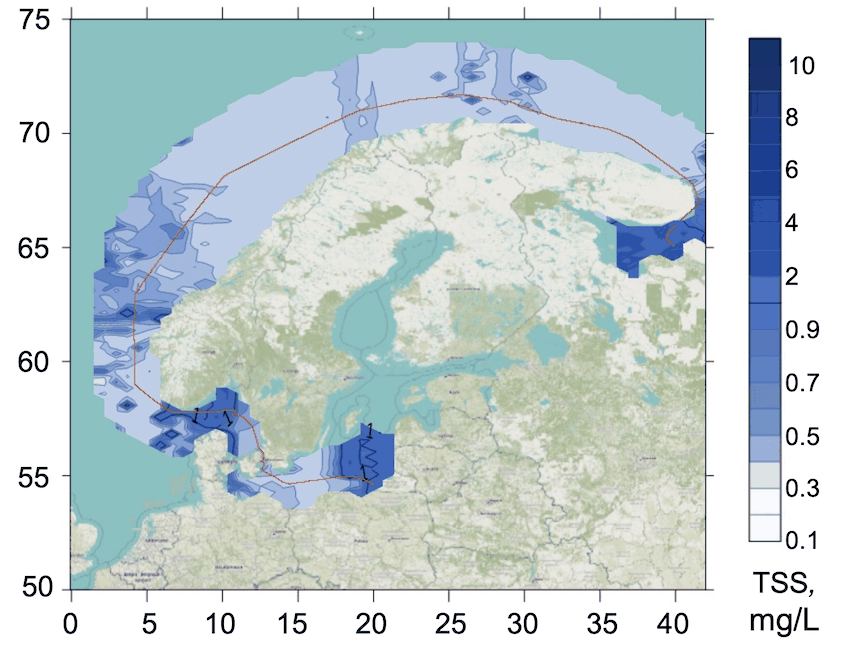
Interpolated total suspended matter field mapped along the lidar track, Baltic, North, Norwegian, Barents seas, Baltic leg
Fig. 4TSM
Norwegian SeaNorwegian Sea
100 km
● Norwegian Sea 2021, 2021-06-10 – 2021-06-14290,258 measurements IDW interpolation, 600 samples
Chl-a0.020.21µg/L
CDOM0.080.21a.u.
TSM0.292.48mg/L

Fig. 5 Campaign measurement record. 290,258 lidar returns are plotted along the vessel track for Chl-a, CDOM, TSM. The field view applies inverse-distance weighting to the same observations; the shoreline is from Natural Earth.

Between 6 and 17 June 2021, a ship-mounted LIF lidar operated continuously during a northbound transit through the western Baltic, North Sea, Norwegian Sea, Barents Sea, and White Sea. The four legs contain close to 900,000 returns acquired with the same instrument and calibration.

Surface chlorophyll-a was near 0.5 µg/L in the western Baltic and below 0.1 µg/L in oligotrophic Atlantic water entering the Norwegian Sea. Values rose again over river-influenced shelves in the Barents and White seas. The route provides a consistent cross-section through several contrasting optical regimes.